

Building a new home or undertaking a major renovation is one of the largest financial investments most people will ever make. Naturally, many homeowners compare multiple estimates before choosing a contractor, and it can be tempting to select the company with the lowest price. While affordability certainly matters, the cheapest proposal is not always the one that delivers the greatest long-term value. Our experienced home builders in Maine understand that comparing construction bids involves much more than looking at the bottom-line number. Knowing what’s included in each proposal can help homeowners make a more informed decision and avoid costly surprises later.
A Bid Is More Than a Price Tag
Every construction proposal represents a contractor’s interpretation of the project. While two bids may appear to cover the same work, they often differ significantly in scope, materials, labor, timelines, and allowances.
One contractor may include premium materials, detailed project management, permits, cleanup, and higher-quality finishes, while another may exclude many of these items to present a lower initial price. Without carefully reviewing each proposal line by line, homeowners may mistakenly believe they are comparing identical services when they are not.
A lower bid may simply reflect fewer included services rather than greater efficiency.
Incomplete Bids Can Lead to Expensive Changes
One of the most common reasons a bid appears unusually low is because important elements have been omitted from the estimate.
These omissions may not become apparent until construction is already underway. At that point, homeowners often face change orders that increase the project’s overall cost well beyond the original proposal.
Examples of commonly overlooked items include:
- Site preparation
- Excavation
- Utility connections
- Permits
- Finish materials
- Landscaping restoration
- Painting
- Final cleanup
- Waste removal
While none of these items may seem significant individually, together they can substantially increase the total project cost.
Quality Materials Affect Long-Term Costs
Construction materials vary dramatically in both quality and lifespan.
Lower bids sometimes rely on less expensive products that may reduce upfront costs but require earlier replacement or more frequent maintenance. Roofing, windows, siding, insulation, flooring, cabinetry, and mechanical systems all influence how well a home performs over time.
Investing in durable materials often provides benefits that extend far beyond aesthetics. Better insulation can reduce energy bills, higher-quality windows improve comfort, and premium roofing materials may last decades longer than budget alternatives.
The true value of a construction project should be measured over the life of the home rather than solely at the time of purchase. That perspective is shared by many homeowners themselves. According to the 2025 Remodeling Impact Report from the National Association of Realtors (NAR) and the National Association of the Remodeling Industry (NARI), 23% of homeowners said the most important result of their remodeling project was achieving durable, long-lasting materials and appliances, while 28% cited improved functionality and livability as the greatest benefit. These findings reinforce that long-term performance and everyday comfort often provide more value than simply minimizing upfront construction costs
Skilled Labor Makes a Difference
Construction is ultimately performed by people, and the experience of those individuals has a direct impact on the finished product.
Highly skilled carpenters, electricians, plumbers, masons, and finish craftsmen typically command higher wages because of their expertise. While labor costs may increase the initial bid, experienced professionals often produce better workmanship, identify potential problems earlier, and complete projects more efficiently.
Poor craftsmanship, on the other hand, can lead to repairs, delays, warranty claims, and frustration long after construction is complete.
Communication Has Value
One area homeowners frequently overlook when comparing bids is communication.
A contractor who responds promptly, explains the construction process clearly, provides detailed schedules, and answers questions thoroughly is offering value that extends beyond construction itself.
Clear communication helps minimize misunderstandings, keeps expectations realistic, and allows homeowners to make informed decisions throughout the project.
Contractors who invest time in planning and communication may submit higher bids because they dedicate additional resources to project management.
That investment often results in a smoother building experience.
Project Management Matters
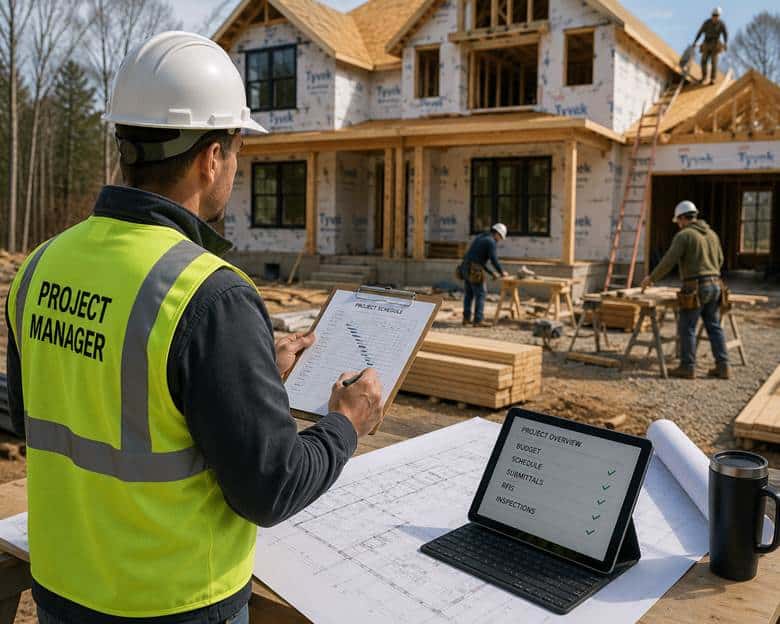
Building a home involves coordinating dozens of subcontractors, suppliers, inspections, deliveries, and scheduling milestones. Effective project management helps ensure each phase progresses efficiently while minimizing delays and costly mistakes.
Experienced contractors carefully schedule work so that excavation, framing, plumbing, electrical, insulation, drywall, and finish trades occur in the proper sequence. Poor coordination can result in scheduling conflicts, idle crews, material shortages, or work needing to be redone. While homeowners may never directly see project management at work, they often benefit from its results.
Low Bids Can Increase Project Risk
A contractor operating with extremely narrow profit margins may face significant financial pressure if unexpected costs arise during construction. Research published by the Project Management Institute (PMI) found that contractors who underprice projects are more likely to reduce the standard of work or rely on unnecessary change orders to recover lost profitability.
Contractors who build realistic project budgets are generally better positioned to absorb unforeseen expenses without sacrificing quality, staffing, or project standards. Selecting a contractor based solely on price may unintentionally increase financial risk for the homeowner.
The Importance of Detailed Specifications
One of the best ways to compare bids fairly is by reviewing the project specifications.
Specifications outline exactly what materials, products, finishes, equipment, and construction methods will be used throughout the project.
Questions worth asking include:
- Which flooring products are included?
- What insulation values will be installed?
- Which window manufacturer is specified?
- Are appliances included?
- What level of cabinetry is provided?
- What roofing material will be installed?
- Are painting and trim work included?
The more detailed the specifications, the easier it becomes to compare competing proposals accurately.
Experience Helps Prevent Costly Mistakes
Experienced contractors have often encountered a wide variety of construction challenges over many years. They understand local building conditions, seasonal weather patterns, permitting requirements, supplier relationships, and potential site complications.
This knowledge allows them to anticipate issues before they become expensive problems.
Less experienced contractors may unintentionally underestimate project complexity, leading to inaccurate bids and unexpected cost increases later. In many cases, experience helps save money in the long run.
Warranties Should Be Part of the Conversation
When comparing bids, homeowners should look beyond the construction price and carefully review the warranty coverage included in each proposal. It’s important to understand what workmanship warranty the contractor provides, what manufacturer warranties apply to the materials and products being installed, how warranty claims are handled, how quickly repairs are typically addressed, and whether warranty service is performed by the contractor’s own team or outsourced to others.
A slightly higher bid that includes comprehensive warranty protection and responsive post-construction support may ultimately provide significantly greater value and peace of mind than a lower-priced proposal with limited coverage.

Reputation Matters More Than Price
Before selecting a contractor, homeowners should evaluate more than the estimate itself.
Online reviews, references, completed projects, licensing, insurance, and years of experience all provide valuable insight into a contractor’s reliability. A company with a long history of successful projects has likely developed systems that consistently produce quality results.
Past performance often provides one of the strongest indicators of future success.
Delays Can Become Expensive
Construction delays affect more than completion dates.
Extended schedules may increase temporary housing costs, storage expenses, financing charges, and overall stress for homeowners.
Contractors with well-organized scheduling systems, reliable subcontractors, and established supplier relationships are often better positioned to keep projects moving efficiently. The ability to complete work on schedule can provide substantial financial value.
Understanding Allowances
Construction proposals frequently include allowances for products that have not yet been selected. These allowances cover items such as flooring, lighting, plumbing fixtures, countertops, appliances, and cabinetry.
If allowance amounts are unrealistically low, homeowners may quickly exceed the budget once actual products are chosen. For example, a bid may include a $300 allowance for a faucet when the homeowner ultimately selects one costing $650. Repeating this scenario across dozens of selections can significantly increase the final project cost.
Understanding allowance amounts helps prevent unpleasant financial surprises.
Building for Long-Term Value
Choosing a home builder is about far more than finding the lowest number on a spreadsheet. Every decision made during construction from the quality of the materials to the skill of the tradespeople and the attention devoted to project management affects how a home performs for years to come. While saving money upfront is an understandable goal, unrealistically low bids often sacrifice quality, communication, or completeness, making the project far more expensive over time.
Instead of focusing solely on the initial cost, homeowners should evaluate the overall value each proposal offers. A well-prepared bid that clearly defines the scope of work, uses quality materials, includes realistic allowances, and reflects experienced craftsmanship often represents the better investment. By taking a comprehensive approach to comparing estimates, homeowners can move forward with greater confidence, knowing they are choosing a contractor who is committed to delivering lasting quality rather than simply the lowest price.