
When planning a new home, it can be tempting to view trees as obstacles that need to be removed before construction begins. For homeowners working with building contractors in Maine, however, preserving existing trees can sometimes create a more thoughtful relationship between the home and the property. Mature trees can provide shade, privacy, wind protection, wildlife habitat, and a sense of established character that newly planted trees cannot immediately replicate. But keeping those trees requires considerably more planning. Excavation, grading, soil compaction, equipment traffic, changes in drainage, and even seemingly minor alterations around a tree can damage its root system and eventually threaten its survival.
A Tree’s Root System Extends Far Beyond the Trunk
One of the biggest misconceptions about protecting trees during construction is that the area immediately surrounding the trunk is the only part that needs to be protected.
A tree’s roots can extend considerably farther than the branches visible above ground. While the exact pattern varies by species, soil conditions, and available moisture, many trees have a substantial portion of their root system within the upper layers of soil.
This creates an important challenge on a construction site.
A house may be positioned several feet away from a tree, yet excavation for the foundation, driveway, utility trench, septic system, drainage feature, or landscaping can still cut through important roots.
The roots responsible for absorbing water and nutrients are particularly vulnerable to disturbance.
Cutting a major root can also affect the tree’s structural stability. A tree may appear perfectly healthy immediately after construction, only to decline months or even years later.
That delayed response can make construction-related tree damage difficult to recognize.
A tree that dies several years after a house is completed may have been affected by changes made during the original construction process.
The Critical Root Zone Deserves Protection
Rather than thinking only about the trunk, construction planning should consider the critical root zone around the tree.
The exact method used to determine an appropriate protection area can vary depending on the species, tree size, site conditions, and recommendations from an arborist. But the fundamental idea is simple: protecting the tree means protecting the soil and root environment around it.
That can include establishing a clearly marked protection zone before construction begins.
Inside that area, the goal is generally to minimize:
- excavation
- grading
- soil compaction
- equipment traffic
- material storage
- fuel or chemical exposure
- unnecessary changes to drainage
An excavator doesn’t have to strike a trunk to cause damage. The tree can be damaged without ever showing an obvious construction injury.
Heavy Equipment Can Change the Soil Without Digging It Up
Soil compaction is one of the less visible risks of construction.
Construction equipment is extremely heavy, and repeated traffic can compress soil particles together. This reduces the spaces between them, limiting the movement of air and water through the soil.
Tree roots depend on both.
Compacted soil can make it more difficult for roots to obtain oxygen and access water. It can also interfere with normal root growth. The problem becomes particularly important when construction equipment repeatedly crosses an area that will eventually become part of the home’s landscaping.
Where possible, equipment traffic should be planned around protected trees rather than simply redirected around them. Temporary access routes can also help concentrate construction traffic in areas where soil disturbance is less consequential.
Grading Can Be Just as Important as Excavation
Homeowners often think about tree protection in terms of avoiding root cutting. Grading presents another significant concern.
Building a house generally requires altering portions of the site. Soil may be removed from some areas and added to others. The ground may need to be shaped to direct water away from the foundation and toward appropriate drainage areas.
Those changes can affect existing trees.
Adding soil around a tree’s trunk can be particularly problematic because it changes the conditions around the roots and base of the tree. Removing soil can also expose roots and alter the environment in which they developed.
Even a relatively small change in grade can affect drainage patterns. A tree that previously received adequate moisture may suddenly sit in an area that drains too quickly. Another tree may begin receiving water from a new roof or driveway drainage system.
This is why preserving trees needs to be considered during site planning, rather than treated as a landscaping decision after the house is designed.
Designing the House Around the Trees
One of the best opportunities to preserve mature trees comes before construction begins.
Instead of first creating a house plan and then figuring out which trees have to be removed, homeowners can consider existing vegetation when determining where the home should sit.
Moving the house footprint a modest distance can sometimes preserve an important tree. Adjusting the driveway route may protect another. A retaining wall, walkway, patio, or outbuilding may also be positioned differently to reduce unnecessary disturbance.
The result can be a home that feels as though it belongs on the property rather than one that was placed on a completely cleared site.
Mature Trees Can Provide Valuable Shade
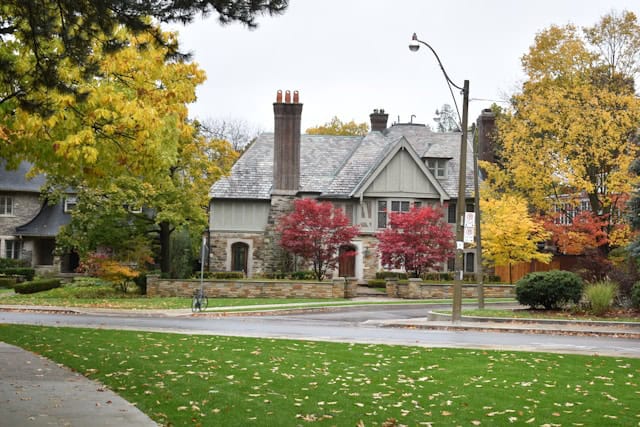
Existing trees can also influence the comfort and energy performance of the finished property. Deciduous trees positioned appropriately around a home can provide shade during warmer months while allowing more sunlight through after their leaves drop. Evergreen trees can provide year-round screening and protection from prevailing winds. The effect depends heavily on species, orientation, tree size, and the home’s location.
Existing trees can also play an important role in how a home feels and functions throughout the year. A strategically positioned mature tree can provide natural shade over a patio, deck, or outdoor gathering area, while trees near the home can help filter strong summer sunlight and create a more comfortable outdoor environment.
For these reasons, tree preservation should be part of the home’s design from the beginning rather than something considered after the building site has already been established. The objective isn’t necessarily to keep every tree on the property. It’s to identify the mature trees that offer the greatest value and determine how they can remain healthy while complementing the home’s layout, outdoor spaces, sunlight, and long-term use.
Not Every Tree Is a Candidate for Preservation
Preserving existing trees does not necessarily mean trying to keep every tree on a property. Some may already be in declining health, while others may have structural problems, disease, storm damage, or compromised root systems that make them poor candidates for preservation. Location also matters. A tree growing directly beside the proposed foundation may create unavoidable construction and long-term maintenance concerns, while another may occupy the only practical location for a driveway or utility route.
In some cases, removing a particular tree can even benefit the surrounding landscape by reducing overcrowding or eliminating a hazardous tree. The goal, therefore, is not to preserve trees at all costs, but to carefully determine which trees are healthy, well-positioned, and valuable enough to incorporate into the finished property. Assessing the site before construction begins can help homeowners make those decisions before clearing, excavation, and grading are underway.
Building With the Property Instead of Against It
Clearing an entire lot can make certain aspects of construction easier. Equipment has fewer obstacles to navigate, grading can be more straightforward, and the home can be positioned without having to work around existing vegetation. However, removing everything also eliminates the shade, privacy, wind protection, natural character, and established landscape that mature trees can provide.
Choosing to build around selected trees requires more coordination and may influence where the home, driveway, utilities, and other features are located, but the result can be a property that feels more naturally connected to its surroundings. Tree preservation should therefore be considered part of the construction process rather than something left for the landscaping stage. By evaluating root systems, soil conditions, drainage, tree health, wind exposure, and future growth before construction begins, homeowners can make informed decisions about which trees to preserve and create a home that works with the existing landscape rather than requiring the property to be completely cleared and rebuilt.